Civic Technology
Class 12 Student Sarthak Sidhant Opens 1.66 Crore Government Procurement Records to the Public
The new public procurement portal turns millions of Indian government tender and award records into downloadable databases, giving citizens, journalists and researchers a sharper tool for public-spending scrutiny.
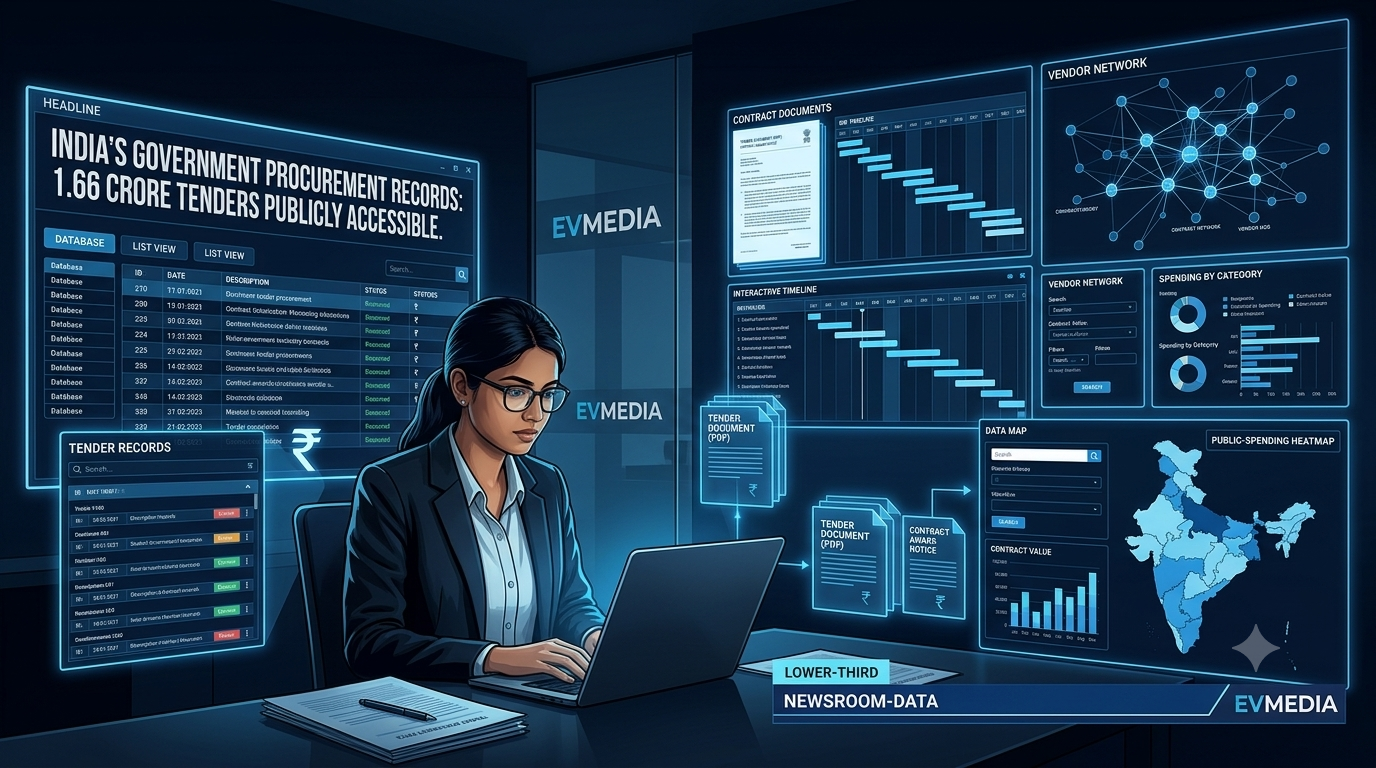
Class 12 student Sarthak Sidhant has launched a public procurement portal containing approximately 1.66 crore structured records sourced from India’s Central Public Procurement Portal, marking a notable moment for student-led civic technology and public-data transparency in India.
The initiative comes weeks after Sidhant drew national attention for analysing documents linked to the Central Board of Secondary Education’s On-Screen Marking system and raising questions about the transparency of the related tender process. His work later reached Parliament, where he appeared before the Parliamentary Standing Committee on Education, Women, Children, Youth and Sports to present concerns around the CBSE OSM rollout.
With the new portal, Sidhant is attempting to widen the discussion from one education-sector tender to the broader universe of public procurement. The project makes large volumes of tender notices and award-of-contract records easier to download and inspect outside the original government portal interface.
What the Portal Contains
The portal’s own index describes the dataset as a mirror of procurement information from the Government of India’s Central Public Procurement Portal, also known as CPPP. The archive is presented as two SQLite databases covering both published tender notices and award-of-contract outcomes.
According to the portal’s published index, the archive includes roughly 4.92 million award-of-contract listing records, around 4.54 million parsed award detail pages, about 3.95 million published tender notice records, and roughly 3.18 million parsed tender detail pages. Together, the index lists approximately 16,592,415 structured records across the databases.
The database fields are designed for public-interest analysis. They include tender IDs, organisation names, reference numbers, publication dates, bid-closing dates, tender-opening dates, contract values, selected bidder names, bidder addresses, number of bids received, tender fees, earnest money deposit values, product categories and other procurement metadata.
Why It Matters
Government procurement is one of the most important but least understood parts of public finance. Every major purchase, works contract, service contract or infrastructure order can leave a trail through tender notices, bid windows, bidder participation, corrigenda and award outcomes. When this information is searchable and analysable at scale, patterns become easier to detect.
The portal explicitly invites citizens, journalists, data scientists and researchers to examine questions such as which vendors repeatedly win contracts, how often tenders receive only one bid, whether bid windows are unusually short, whether contract values show outliers, and how procurement patterns vary across departments and sectors.
That makes the project more than a database dump. It is an invitation to turn public documents into public accountability. By converting scattered procurement pages into downloadable structured files, the portal lowers the barrier for watchdog reporting, civic research and independent audits.
From CBSE Tender Questions to Procurement Transparency
Sidhant first came into the public spotlight after examining CBSE tender documents connected to the digital evaluation of Class 12 answer sheets. India Today reported that his investigation began after he obtained scanned copies of his own answer sheets and noticed differences in marks awarded. He later examined multiple versions of CBSE tender documents available in the public domain and claimed to have found changes in eligibility criteria, performance clauses and certification requirements.
The claims around the CBSE tender process should be understood as allegations and document-based observations, not as a final judicial finding. However, the controversy triggered public debate around digital evaluation, procurement transparency and the need for stronger accountability in technology-led education reforms.
Sidhant’s appearance before a parliamentary panel gave the issue additional significance. India Today reported that the panel was reviewing the implementation of the OSM system amid complaints from students and parents about alleged evaluation discrepancies, answer-sheet mismatches, technical glitches and difficulties in the post-result verification process.
The Official Source: India’s CPPP
The Central Public Procurement Portal is the Government of India’s tender portal for public procurement. The official CPPP website describes itself as the Central Public Procurement Portal of the Government of India and provides access to active tenders, corrigenda, tender results, bid awards, tender calendars and related procurement resources.
The official site is maintained by the National Informatics Centre in association with the Procurement Policy Division of the Department of Expenditure under the Ministry of Finance. This matters because Sidhant’s portal is not creating new government data; it is reorganising and mirroring public procurement records that were already available through official systems.
The core civic question is whether public data is truly accessible when it exists online but is difficult to download, search, compare or analyse in bulk. Sidhant’s project argues that accessibility requires more than publication; it requires usability.
Open Data, Scraping and Public Interest
The project also raises a broader debate about scraping and public-interest data work. Scraping public portals can help journalists and researchers analyse large systems, but it also requires careful handling of data integrity, source attribution, legal compliance and security.
Sidhant’s portal attempts to address data-integrity concerns by publishing SHA-256 hashes for the downloadable database files, allowing users to verify that downloaded copies match the stated files. The index also describes the schema and key research angles, including bid-competition analysis, vendor concentration, financial anomaly detection, timeline integrity and department-level procurement mapping.
For researchers, those schema notes are important. They make the dataset easier to query and reduce the time needed to understand how records are structured. For journalists, the dataset could become a starting point for procurement investigations, but any findings would still require verification against original documents, government responses and vendor records.
What Comes Next
The immediate next step is likely to be public analysis. If researchers and journalists begin running queries on the database, the portal could produce stories around single-bid contracts, unusually short tender windows, repeated vendor concentration, procurement outliers and department-wise spending patterns.
However, the project’s impact will depend on how responsibly the data is used. Procurement records can point toward patterns, but patterns are not proof of wrongdoing. Strong public-interest reporting will need to distinguish between anomalies, administrative explanations and actual evidence of misconduct.
Still, the launch is significant because it shows how a student-led technical project can push public institutions, media houses and citizens to look more closely at how public money is awarded and tracked.
Key Takeaway
Sarthak Sidhant’s procurement portal represents a powerful civic-technology moment: public records that were technically available are now easier to download, search and analyse. The project does not automatically prove corruption or wrongdoing, but it gives citizens and researchers a practical tool to ask better questions about public spending.
In an era where government systems are becoming increasingly digital, the larger message is clear: transparency is not only about publishing information. It is about making that information accessible, structured, verifiable and useful for public scrutiny.
Sources: India Today, Sarthak Sidhant procurement portal index, Central Public Procurement Portal, The New Indian Express, Deccan Herald and related education-sector coverage.