Technology Briefing
AI Week: OpenAI Adds Dean Ball, Jio Pushes Call Agents, Telegram Ban Holds and Enterprises Rein In Costs
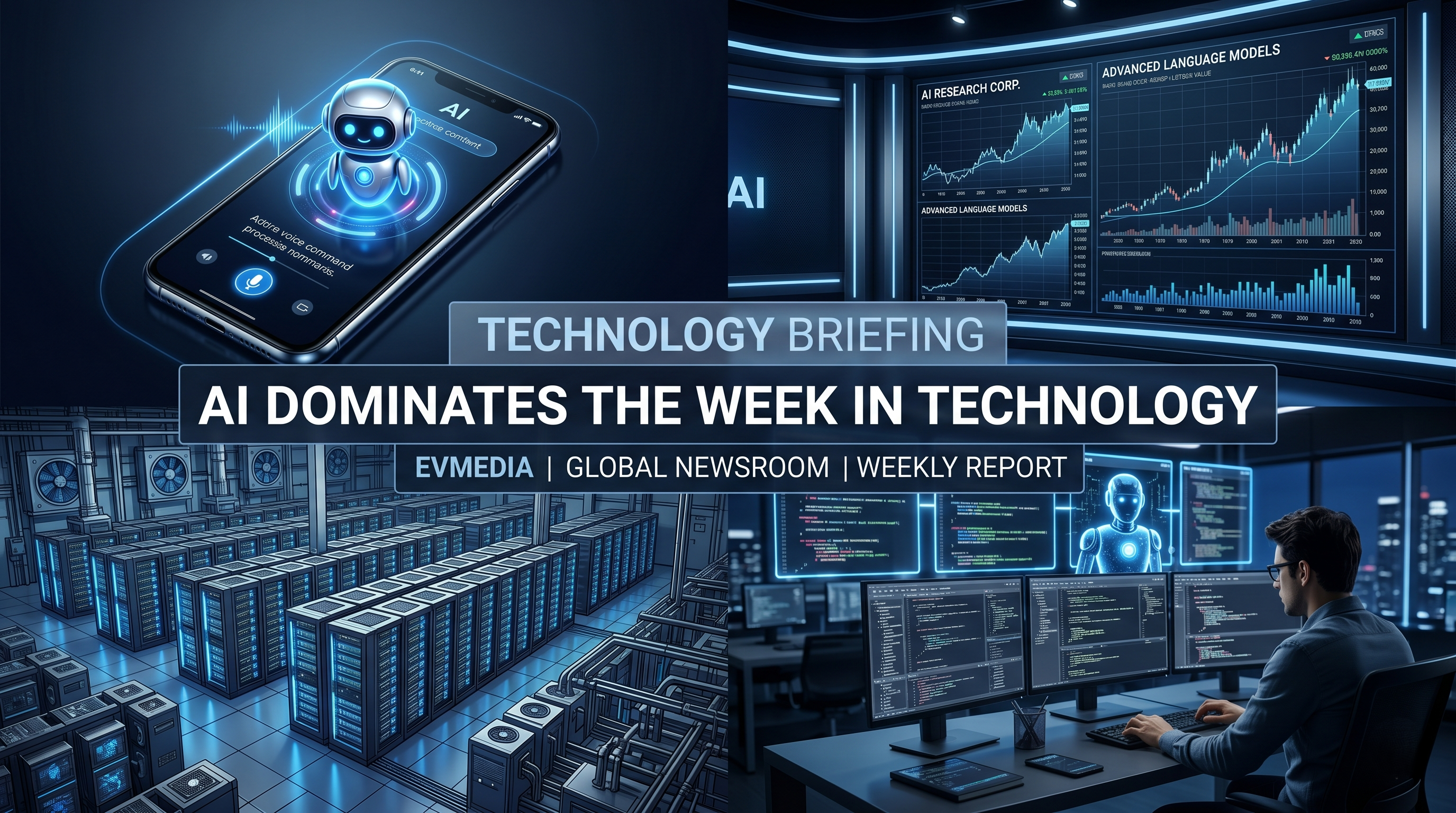
The latest technology cycle shows artificial intelligence moving from hype into policy, telecom infrastructure, legal scrutiny, enterprise cost discipline and market pressure.
This week’s major technology developments show how quickly artificial intelligence is spreading across the global economy. OpenAI is strengthening its policy and governance bench, Reliance Jio is preparing to embed AI directly into phone calls, Indian courts and regulators are testing the limits of platform blocking, and large enterprises are beginning to question whether agentic AI spending can scale without tighter controls.
The central theme is no longer just adoption. The new story is control: who governs frontier AI, who pays for token-heavy workflows, who gets access to communication platforms during sensitive national events, and how large technology companies convert AI enthusiasm into sustainable business results.
OpenAI Brings Dean Ball Into Its Policy Strategy
OpenAI is adding AI policy scholar Dean Ball to its ranks, with Axios reporting that Ball will lead a new Strategic Futures team focused on frontier AI policy and internal governance. Ball previously served as senior policy adviser for AI and emerging technology at the White House Office of Science and Technology Policy and helped shape early AI policy under the Trump administration.
The move matters because frontier AI companies are now competing not only in models and products, but also in regulation, safety frameworks, government relations and public trust. By bringing in a policy figure known for writing and thinking deeply about AI governance, OpenAI is signaling that strategic policy work is becoming core infrastructure for the company.
This comes during a broader period of high-profile AI talent movement, as frontier labs compete for researchers, policy experts and executives capable of helping them navigate public-market ambitions, national-security questions and international AI rules.
Reliance Jio Wants to Put AI Inside Phone Calls
In India, Reliance Jio announced one of the most consumer-facing AI telecom pushes yet: an AI Call Agent embedded directly into the Jio network. India Today reported that the assistant will be able to transcribe calls, summarize conversations and complete tasks during calls, while Economic Times reported that users will be able to activate it by saying “Hey Jio” during a call without needing a separate app.
The assistant is expected to identify up to 10 speakers in conference calls, generate summaries, create reminders and action items, and help users perform tasks such as booking cabs, ordering food, reserving restaurant tables or scheduling meetings. Jio is also positioning the service for Indian-language use, an important factor in a country where voice remains one of the most natural computing interfaces.
The bigger signal is that AI may be moving from standalone apps into telecom networks themselves. Instead of asking users to open a chatbot, Jio is trying to make AI part of ordinary communication. If successful, this could make India one of the largest real-world test markets for call-native AI assistants.
Telegram Block in India Tests Platform Power and Public Interest
India’s temporary block on Telegram has become one of the week’s most important platform-governance stories. Reuters reported that India blocked Telegram until June 22, 2026, saying the platform was used by cheating rackets to defraud candidates appearing for the NEET 2026 re-examination. The government described the restriction as a last-resort measure after earlier takedown efforts failed.
Internet Freedom Foundation reported that the Delhi High Court upheld the temporary Telegram ban connected to the NEET-UG 2026 exam. The case raises a familiar but difficult technology-policy question: when a platform is allegedly used for organized harm, how far can the state go without disproportionately affecting ordinary users?
Telegram founder Pavel Durov criticized the move, arguing that the ban punished ordinary users without stopping the underlying leaks. Digital-rights advocates also warned that platform shutdowns risk becoming blunt instruments when more targeted enforcement may be possible.
Enterprise AI Faces a Cost Reality Check
After months of rapid enterprise AI adoption, several major companies are now reassessing usage because of rising token bills and agentic AI costs. Times of India, citing a Financial Times report, said companies including Amazon, Walmart, Cisco, Uber and Meta are introducing usage caps, discouraging unnecessary AI use or pushing employees toward cheaper models.
The issue is not that AI tools have suddenly stopped being useful. The issue is that AI agents can consume far more compute than simple chatbot interactions. Multi-step workflows, repeated tool calls, long context windows and autonomous coding tasks can turn internal experimentation into large and unpredictable invoices.
For enterprises, the lesson is clear: AI adoption must now be paired with cost governance. Companies may increasingly ask teams to justify which model they use, whether a task requires a premium model, and whether the output creates enough measurable value to justify the spend.
ChatGPT Market Share Falls Below 50%, But It Still Leads
The consumer AI market is also becoming more competitive. TechCrunch, citing Sensor Tower’s State of AI Report, reported that ChatGPT’s global AI assistant market share fell to 46.4% by the end of May 2026, below the 50% mark for the first time. Gemini rose to 27.7%, while Claude reached 10.3%.
Despite the share decline, ChatGPT remains the largest AI assistant by monthly active users, with TechCrunch reporting more than 1.1 billion monthly users. The shift is still important because it shows that AI users are willing to switch between assistants based on features, ecosystem integration, trust, pricing and model quality.
For OpenAI, this means market leadership is no longer guaranteed by early-mover advantage alone. For Google, Anthropic and other competitors, it shows that distribution and trust can still reshape the AI assistant market.
Accenture Outlook Hits Indian IT Stocks
Reuters reported that India’s Nifty IT index fell to a three-year low after Accenture forecast quarterly sales below Wall Street expectations, cut its annual revenue outlook and reported softer managed-services bookings. Major Indian IT companies including TCS, Infosys and HCLTech declined as investors reacted to the signal from Accenture.
The market reaction reflects a deeper concern: India’s large IT services sector is under pressure from weak discretionary tech spending, geopolitical uncertainty and AI-led disruption risk. Traditional outsourcing models are being challenged by automation, AI copilots and changing enterprise technology budgets.
Accenture’s outlook does not mean Indian IT is finished. But it does show that investors are demanding evidence that IT services firms can adapt quickly to AI-native delivery models and defend growth in a slower spending environment.
Devices Remain Busy, But AI Is the Real Hardware Story
Hardware news also remained active, with OPPO teasing the global Reno16 Series 5G launch and multiple reports discussing expected iPhone 18 Pro Max upgrades. These include rumored camera improvements, AI-focused performance upgrades and possible India pricing expectations.
However, these device stories remain less important than the broader trend behind them. Whether it is OPPO’s intelligent ecosystem push or Apple’s rumored AI-focused hardware upgrades, consumer devices are increasingly being designed around AI performance, camera intelligence, voice assistants and on-device processing.
Key Takeaway
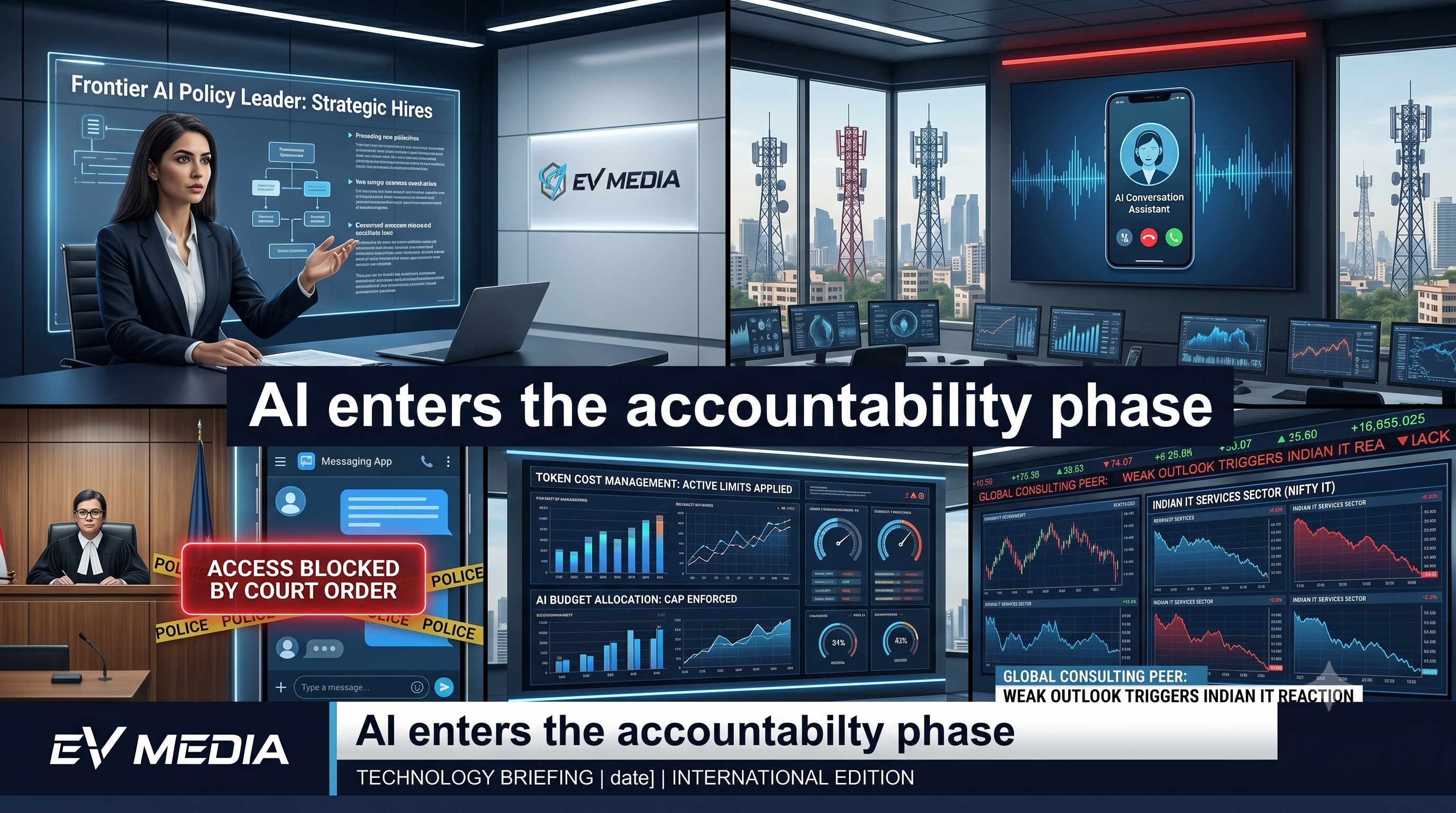
This week shows AI entering its accountability phase. OpenAI is hiring for policy depth. Jio is pushing AI into mass-market telecom use. India is testing aggressive platform controls around exam integrity. Enterprises are learning that agentic AI needs financial governance. ChatGPT is still dominant, but the market is fragmenting. Indian IT stocks are being forced to price in AI disruption.
The next phase of technology will not be defined only by who builds the smartest AI model. It will be defined by who can govern it, deploy it affordably, integrate it into everyday life, and prove that the economics work at scale.
Sources: Axios, India Today, Economic Times, Reuters, Internet Freedom Foundation, TechCrunch, Times of India, TechRadar, GSMArena, OPPO and Moneycontrol.